EV News · July 16, 2026
NACS vs J1772 in 2026: Does the Connector Switch Change Home Charging?
Most new EVs sold in North America are moving to the NACS (SAE J3400) charging port. If you're shopping for a home charger, the natural question is whether a J1772 unit is about to become obsolete. Short answer: no — and here's why.
What's actually changing
Starting with 2025 and 2026 model years, most major automakers — Ford, GM, Rivian, Hyundai, Kia, and others — began shipping vehicles with a native NACS port, the connector Tesla pioneered. NACS is smaller than the CCS combo plug and supports very high DC fast-charging speeds, which is why the industry standardized on it for public fast charging.
Why home charging still runs on J1772
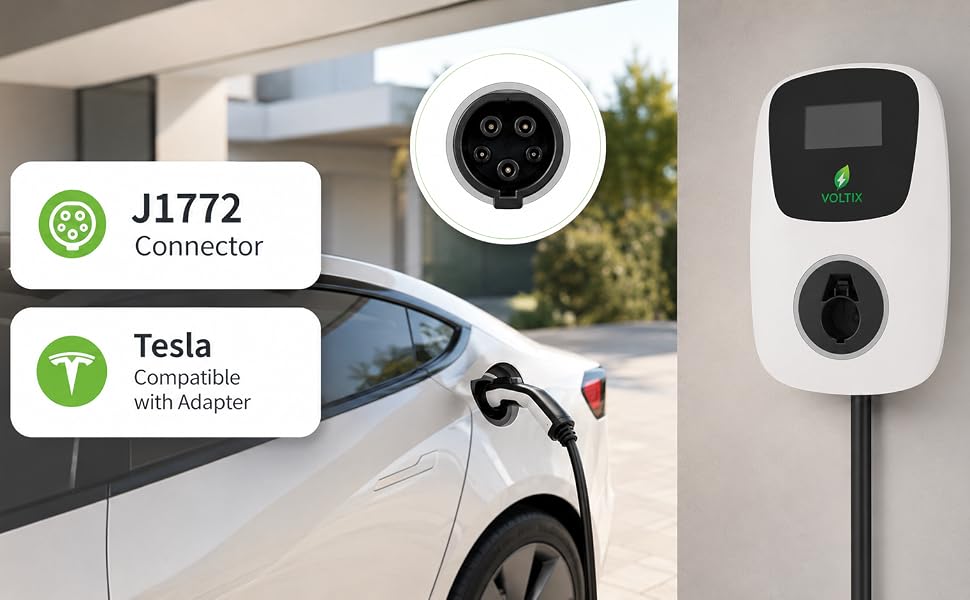
The transition is mostly a DC fast-charging story. For Level 2 AC charging — which is what every home charger does — the electrical protocol is identical under both plugs. Virtually every Level 2 home charger sold in North America today ships with a J1772 connector, and every NACS-equipped vehicle can charge from one using a simple AC adapter. Tesla has included a J1772 adapter with its vehicles for years, and most NACS-native EVs from other brands ship with one or offer it from the automaker.
Adapters are also now properly certified: UL 2252, the safety standard for EV charging adapters, saw its first certifications in 2025, with listed AC and DC adapters available from manufacturers including A2Z EV, Amphenol, and Lectron.
The install base matters
There are millions of J1772-port EVs and PHEVs already on North American roads, and they'll be driving for another decade or more. That's why charger manufacturers have kept J1772 as the default home connector: it natively serves the existing fleet and serves NACS vehicles through an inexpensive adapter. The reverse — a NACS-only home charger — would leave the majority of today's EVs needing an adapter instead.
What this means if you're buying a home charger now
A J1772 Level 2 charger remains the practical choice in 2026. Whether your EV has a J1772 port or a NACS port, a 48A unit like the Voltix Level 2 charger delivers the same 11.5 kW either way — your car's onboard charger, not the connector, sets the AC charging speed. If you drive a Tesla or a NACS-native EV, plan on using the J1772 adapter that likely came with your car.
If you want to check which vehicles work natively versus with an adapter, see the compatibility table on our homepage, or compare charging speeds on our charging time guide.
One charger. Every EV.
Voltix uses the universal J1772 connector — native for most EVs, Tesla-ready with the included adapter.
Rebate deadlines & new guides, by email
Charger rebate rules and approved-model lists change. Get a short note when programs change or we publish a new guide. No spam.